
Dyson built a toothbrush with a camera in it. This is not a sentence I expected to type, but there it was in my news feed today. The toothbrush has a tiny camera in it that’s intended to detect the spaces between a user’s teeth and direct tiny jets of mouthrinse at the spaces to target plaque. It costs $499, roughly $100 more than current elite electric toothbrushes.
This is the definition of a solution in search of a problem. I may be wrong, but the fact that they haven’t produced real-world data showing this is solving a real need is the giveaway.
In my role as a PM I was taught to start with a problem, not a technology. It’s so tempting to go the other way around – start with some cool tech, some interesting thing someone figured out how to do, something leadership wants everyone to do – and then start trying to shoehorn it into a product.
It almost never works.
What does work is starting with a problem, then designing a solution that solves the problem, then testing it for real to make sure it actually does solve the problem. Less sexy, but effective.
Some of the best innovations came from people who saw a way to use a technology in a new way, or to solve a problem people didn’t even perceive as a problem because they couldn’t conceive of a solution. For thousands of years people ate bread, slicing it by hand. The automatic bread slicer was a solution no one was clamoring for, until it existed. Now every great invention gets compared to it: “the best thing since sliced bread.” We don’t always know what’s possible until someone shows us a better way, and before long we wonder how we ever got along without it.
This is what’s hard about starting to use AI. If you don’t know what AI can do, it’s hard to imagine what problems it can solve for you. What to do? Start with your goals. Are you trying to grow, increase your profit margin, free up time for strategic thinking, launch a new product line?
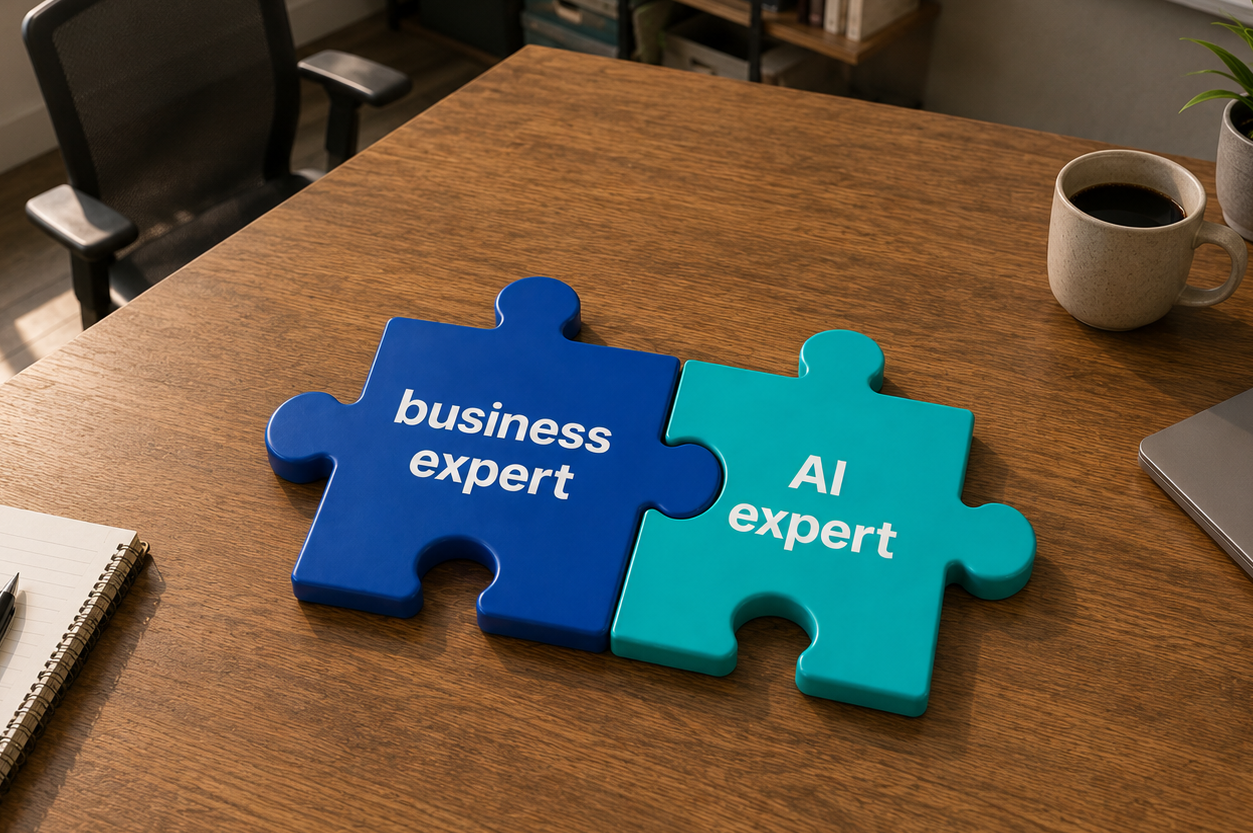
You’re the expert in your business and what you’re trying to accomplish. Pair that with someone who’s an expert at seeing the problems in the way of your goals and translating them into real AI use cases. That’s what an AI Opportunity Assessment does. It’s how you get from “I don’t know what to ask for” to “I’m seeing results” without having to become expert at AI yourself.
I’ve spent more than 20 years in big tech solving real customer problems and driving change at an enterprise level. Now I do that for businesses of all sizes.
If you want to learn how to take a quantum leap with AI, you’re in the right place. Let’s find time to connect and talk about how your organization can become one of the few who do AI right.